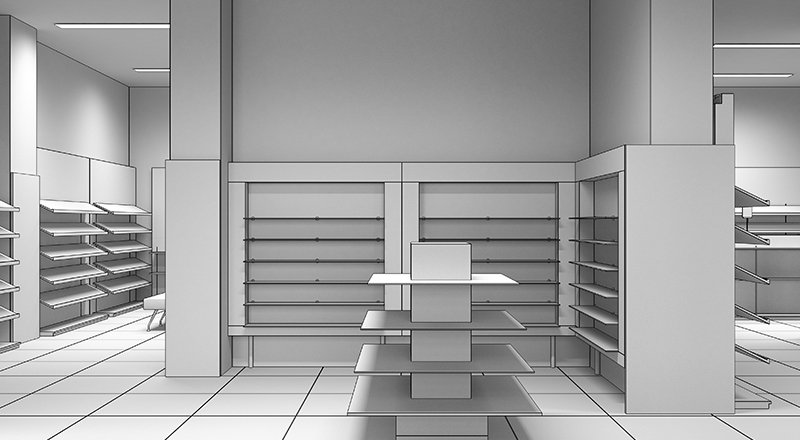
General trade vs modern trade is the first strategic question every FMCG brand entering the Indian market has to answer, and getting it wrong costs real shelf space. General trade covers the millions of small, independently run kirana stores, chemists, and neighbourhood shops that still handle a large share of daily FMCG purchases across India. Modern trade covers organised retail: supermarket chains, hypermarkets, and large format stores that run on centralised buying, planograms, and formal vendor contracts. The two channels do not just look different on paper. They run on entirely different rules for stocking, pricing, promotion, and even how a brand gets paid.
A brand that treats these two channels the same way, using one sales team, one trade scheme, and one merchandising plan for both, usually ends up underperforming in at least one of them. General trade rewards relationships and frequent field visits. Modern trade rewards data, negotiation, and compliance with a retailer’s own category management rules. Building a strategy that respects both, rather than picking a favourite, is what actually drives volume across India’s retail network.
This piece looks at how general trade and modern trade differ in practice, why most FMCG brands end up running a dual-channel strategy rather than choosing one, and what that structure actually looks like on the ground.
General Trade vs Modern Trade: What Actually Separates Them
General trade, often shortened to GT, refers to the small, independently owned stores that make up most of India’s retail footprint: kirana stores, chemists, paan shops, and local grocers. Each one is run by an owner who makes stocking decisions alone, often on cash terms, and who values a brand representative who shows up regularly far more than one who calls once a quarter.
Modern trade, or MT, refers to organised retail chains: supermarkets, hypermarkets, and large format stores that operate through centralised procurement teams. Getting a product onto a modern trade shelf usually involves a formal listing process, negotiated margins, and sometimes a slotting fee, followed by an ongoing obligation to maintain planogram compliance and meet the retailer’s own sales targets for that shelf space.
The practical difference comes down to who holds the decision-making power. In general trade, that power sits with thousands of individual shop owners spread across the country. In modern trade, it sits with a much smaller number of category buyers, each one managing shelf space across hundreds of brands at once.
Why General Trade Still Drives the Bulk of Indian FMCG Sales
Kirana stores remain deeply embedded in daily life across Indian cities, towns, and villages. A shopper can walk to one in under five minutes from most homes, buy on informal credit if needed, and trust the shopkeeper’s recommendation when two similar products sit side by side. That combination of convenience, credit, and personal trust is difficult for any modern trade format to fully replicate, no matter how large the store or how competitive the pricing.
General trade also reaches places modern trade has not gotten to yet. Large format stores concentrate in cities and larger towns, while general trade stretches into semi-urban and rural markets where a supermarket chain may never open a branch. For a brand chasing national coverage rather than just metro visibility, general trade is often the only realistic route to reach that scale.
What Modern Trade Offers That General Trade Cannot
Modern trade gives a brand something general trade structurally cannot: a controlled, consistent retail environment. Shelf placement follows an agreed planogram rather than a shopkeeper’s personal preference, so a brand knows roughly where and how its product will appear across every store in that chain.
It also opens the door to point of sale data that general trade rarely provides. A modern trade chain can usually share sell-through numbers by store, which lets a brand see exactly which locations and regions are performing, rather than relying on distributor estimates. That visibility makes modern trade a useful testing ground for new product launches or premium variants before a wider general trade rollout, since results are far easier to track and compare.
Basket sizes tend to run higher in modern trade too, since shoppers there are often doing a full grocery run rather than picking up one or two items on the way home, which changes how a brand should think about pack sizes and bundled offers for that channel.
Building a Dual-Channel Strategy: Where the Two Approaches Diverge
Running both channels well means accepting that a shared playbook rarely works. Four areas usually need separate plans.
Sales Structure and Field Team Design
General trade needs a wide field force covering many small outlets, often working through distributors who already have local relationships. Modern trade needs a smaller, more specialised key account team focused on a handful of retail chains, since the relationship depends more on negotiation skill than on outlet count.
Trade Scheme and Incentive Design
General trade responds well to small, frequent incentives that a shopkeeper feels immediately, such as extra margin on a festive season order. Modern trade tends to run on formal joint business plans agreed months in advance, with targets, promotional calendars, and margin structures locked in before the quarter even starts.
Merchandising and Visual Standards
In general trade, visual merchandising has to work within a shopkeeper’s willingness to rearrange a crowded, often cluttered shelf. In modern trade, it has to work within a strict, retailer-approved planogram that leaves little room for improvisation, but rewards consistent compliance with better long-term shelf position.
Data and Reporting Needs
Modern trade often hands over usable sales data directly. General trade rarely does, which means a brand needs its own field reporting and store-level tracking to get any real visibility into what is actually selling and where.
Common Mistakes Brands Make When Running Both Channels
The most frequent mistake is copying a modern trade plan onto general trade, or the other way round. A joint business plan designed for a hypermarket chain means very little to a kirana owner who wants to know what happens for him this week, not next quarter.
Underinvesting in general trade because it is harder to measure is another common trap. Since modern trade hands over clean data and general trade does not, budgets can quietly drift toward the channel that is easier to report on, even when general trade is quietly driving a larger share of actual volume.
Overspending on modern trade slotting fees without earning enough shelf velocity is the reverse problem. A brand can end up paying heavily for premium shelf space in a chain, only to find the product moves too slowly to justify the cost once the listing fee and ongoing margin support are factored in.
Ignoring regional variation within general trade itself causes further damage. A kirana strategy built around habits in one state can fall flat in another, since stocking patterns, preferred pack sizes, and even payment cycles shift noticeably from region to region.
General Trade vs Modern Trade: Practical Steps to Balance Both
Start by segmenting the trade budget by actual channel contribution rather than by how easy each channel is to report on. If general trade drives most of the volume, its share of the budget and field effort should reflect that reality.
Set separate KPIs for each channel instead of one blended target. Shelf share and outlet coverage make sense as general trade metrics, while sell-through rate and planogram compliance fit modern trade better.
Train field teams differently for each channel, since the skills needed to build trust with a kirana owner over several visits are not the same skills needed to negotiate a joint business plan with a category buyer.
Invest in technology that captures general trade performance despite its fragmentation, through field reporting apps and store audits, so that channel stops being a data blind spot compared to modern trade.
Finally, review the channel mix on a regular cycle rather than setting it once a year. Quick commerce and modern trade are both growing fast in Indian cities, and a channel split that made sense two years ago may already be out of date.
How Retaspect Helps Brands Execute Across Both Channels
Retaspect works with FMCG and retail brands on the operational side of running general trade and modern trade side by side. Feet on street deployment puts field teams into general trade outlets that need regular coverage and relationship management, while trade marketing services handle in-shop branding, POSM, and merchandising standards suited to each channel’s format.
On the data side, sellout management and technology solutions give brands visibility into performance across both channels rather than only the modern trade stores that already share their own numbers. For brands trying to grow general trade coverage without losing focus on modern trade relationships, that combination of field presence and reporting is usually what makes a dual-channel plan practical rather than theoretical.
Two Retail Channels, One Coordinated Strategy
General trade and modern trade are not competing priorities that force a brand to pick one. They are two different retail environments that call for two different playbooks running under one coordinated strategy. A brand that gives each channel its own field structure, its own incentives, and its own way of measuring results usually ends up ahead of a brand trying to force one national plan to fit both.
India’s retail base will likely stay dual-channel for a long time yet, with kirana stores holding their ground even as modern trade and quick commerce keep expanding in cities. Brands that build for both now, rather than treating one as an afterthought, tend to hold a stronger position no matter which way that balance shifts next.
Frequently Asked Questions About General Trade and Modern Trade
What is the main difference between general trade and modern trade?
General trade covers small, independently owned stores where the owner makes stocking decisions directly. Modern trade covers organised retail chains that buy centrally and follow formal planograms and listing agreements.
Should a new FMCG brand start with general trade or modern trade?
It depends on the product and budget. Modern trade offers a controlled environment and usable sales data that suits testing new launches, while general trade offers wider geographic reach and is often needed to build real national scale.
Why is general trade harder to measure than modern trade?
Modern trade retailers typically share point of sale data directly with brands. General trade stores rarely do, so brands need their own field reporting and store audits to get comparable visibility into performance.
Can a single sales team manage both general trade and modern trade?
It is possible for very small brands, but most growing FMCG companies eventually split the two, since general trade needs broad field coverage while modern trade needs focused key account management with a small number of retail chains.
Recent Posts
-
 In-Store Promoters: How They Drive Retail Sales and Brand Visibility
 -
 Retail Execution Software: A Buyer’s Guide for Indian Brands
 -
 General Trade vs Modern Trade: A Dual-Channel Strategy for Indian Retail Brands
 -
 What is Trade Marketing? How FMCG Brands Win at Retail in India
 -
 The Importance of Below-The-Line (BTL) Marketing During the Festive Season